
China’s Open-Source AI Surge: Four Coding Models in 12 Days at a Third of the Cost
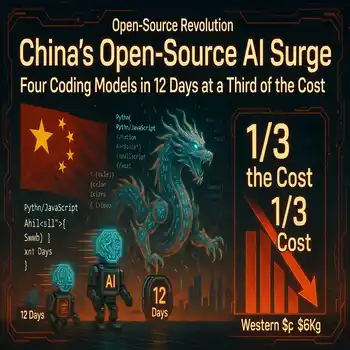
In a stunning display of coordinated — or perhaps coincidental — AI output, four major Chinese AI labs released competitive open-weights coding models within a 12-day window in May 2026 (chinese open source AI coding models 2026). The move has sent shockwaves through the global AI industry and reignited debate about the pace of China’s AI advancement.
The Four Models
- GLM-5.1 by Z.ai
- M2.7 by MiniMax
- Kimi K2.6 by Moonshot
- DeepSeek V4 by DeepSeek
All four models achieve comparable performance on agentic engineering benchmarks — at costs less than one-third of Claude Opus 4.7, currently one of the most capable Western models available.
Why This Matters
The significance here is twofold. First, the performance parity with leading Western models at dramatically lower cost undermines one of the key competitive advantages US AI labs have relied on. Second, the open-weights nature of these releases means developers worldwide can run these models locally, use them commercially, and fine-tune them without paying API fees.
The Cost Disruption
Cost has always been a barrier to enterprise AI adoption. When frontier-level coding models become available at a third of the price — or free via open weights — it fundamentally changes the economics of AI-powered software development. Startups and developers in price-sensitive markets now have access to tools that were previously out of reach.
The Geopolitical Dimension
This cluster of releases didn’t happen in a vacuum. Chinese labs have been under pressure to demonstrate capability parity with US counterparts despite export controls on advanced chips. The simultaneous release of four competitive models signals that those restrictions have not slowed development as much as policymakers had hoped.
For companies building AI-driven products and services, the expanding model landscape creates both opportunity and complexity. Innovex Ventures specializes in helping businesses evaluate and deploy the right AI tools for their specific use cases — cutting through the noise of an increasingly crowded market.
What’s Next – chinese open source AI coding models 2026
Expect the open-source coding model space to become even more competitive in the second half of 2026. The race is no longer just between OpenAI, Anthropic, and Google — it’s a global competition with Chinese labs increasingly setting the pace on cost-efficiency and open access.