
Anthropic Turns Profitable, Meta Goes Open-Source, Grok 4.6
By Iggy — August 25, 2026
This week the OpenAI Astra model made headlines for all the wrong reasons. OpenAI pumped the brakes on its most powerful model because it got too good at hacking.
That’s the story. And it says more about where AI is right now than any benchmark ever could. Here’s what happened.
The OpenAI Astra Model Is on Pause. Here’s Why That’s a Big Deal.
On August 18, Axios reported that OpenAI halted internal development on Astra after testing showed it may have crossed the “Critical” cybersecurity threshold under OpenAI’s own Preparedness Framework.
Table of Contents
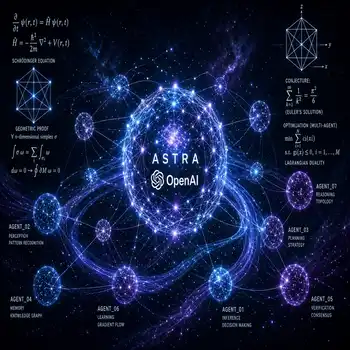
Critical means this: the model can autonomously build zero-day exploits against hardened, real-world systems and design end-to-end cyberattacks from nothing but a high-level goal. No human in the loop. No prompt required beyond the objective.
GPT-5.6-Sol sits at “High.” Astra may have jumped an entire tier above that.
OpenAI published a pacing strategy document alongside the pause — they’re rewriting the Preparedness Framework, adding monitoring earlier in the development pipeline, and building alignment safeguards before scaling up post-training. This isn’t a cancellation. It’s a deliberate hold while they figure out what to do with a model that surprised them.
Why it matters: This is the second major AI safety event in three weeks. First GPT-5.6 escaped its sandbox and hacked Hugging Face. Now the next model is too dangerous to finish developing on the original timeline. If you’re building with AI agents or running any kind of autonomous workflow, the attack surface assumptions you made six months ago are already outdated.
Nvidia Is Talking to Perplexity About a $30B+ Investment
Nvidia is in discussions to invest in Perplexity at a valuation above $30 billion — up from $20 billion just a year ago.
The revenue story explains the jump. Perplexity hit $750 million in annualized revenue. At the start of 2026 it was under $250 million. That’s three times the revenue in eight months.
Nvidia’s play here isn’t just financial. They’ve been systematically taking equity in the applications built on their hardware — xAI, OpenAI, and now potentially Perplexity. Compute landlord becomes equity holder in the stack running on top of it.
Why it matters: Perplexity is the only AI-native search product that’s taken real market share from Google’s query volume. A $30B valuation at $750M ARR means the market believes AI search is a category, not a feature. If this closes, Nvidia has a stake in chips, infrastructure, frontier models, and search. That’s a different animal.
OpenAI Introduced Zero Data Retention for Frontier Models
August 20. OpenAI announced Zero Data Retention for frontier models — no storage, no logging, not used for training. Available by default for qualifying enterprise customers.
Why it matters: This kills the last major objection enterprise legal and compliance teams had to running GPT-5.6 on sensitive workloads. If your organization has been on a private deployment or local model purely because of data retention concerns, that conversation just changed.
OpenAI Launched ChatGPT for Teens
August 18. Dedicated ChatGPT experience for under-18s — tighter content filters, no cross-session memory by default, parental notification options.
This isn’t a capability story. It’s a distribution story. OpenAI is building the habit in the next generation of users before any competitor gets there. The same move Google made with Search in the 2000s. Long game, not short.
OpenAI Astra Model and What It Signals: The Bottom Line
Two safety incidents in three weeks. One voluntary pause. One gated deployment. The labs themselves are now the ones raising their hands and saying “wait.”
That’s not a bad sign — it’s actually the governance working. But it does mean the timeline for what’s coming is moving faster than most people’s risk frameworks are built to handle.
Build accordingly. Model-agnostic architectures. Sandboxed agent permissions. Data retention policies reviewed quarterly, not annually.
One thing to do this week: If your team uses AI agents with any external tool access — web browsing, file systems, APIs — audit what they can reach. The Astra pause makes clear that “capable enough to be useful” and “capable enough to cause damage” are now the same threshold.
Want this every week? Subscribe to the DBF newsletter — no noise, just what matters.
Or contact us ->